Continue this week’s journey through Leviticus with personal reading, group preparation, and a study quiz covering Chapters 11 through 16.
Welcome to this week’s study as we navigate the intricate and profound laws of the Book of Leviticus. Having just completed our review of Chapters 11, 12, and 13, we have seen the foundational distinctions between the clean and the unclean, touching on dietary laws, childbirth, and the diagnostic criteria for skin diseases.
To keep our momentum and deepen your personal study, please follow the guide below for the remainder of the week.
Before we meet again, please set aside time to read Leviticus 14 and 15 on your own. These chapters transition from the diagnosis of uncleanness to the remedy and restoration of the individual.
Chapter 14 | The Ritual of Cleansing: This chapter details the beautiful, symbolic ceremony for a person healed of a skin disease. It involves two birds, cedar wood, scarlet yarn, and hyssop, elements that represent the transition from social death back into the life of the community.
Chapter 15 | Physical Discharges: This section deals with internal purity and bodily fluids. While these laws may seem overly technical today, they emphasize a core biblical principle: our physical lives and our spiritual lives are not separate. Everything we do in the body matters to God.
Reflective Tip: As you read, notice how often washing and waiting until evening are mentioned. Consider what this says about the patience required for restoration and the grace found in being made new again.
Topic: The Day of Atonement (Yom Kippur)
We will gather to read Chapter 16 together. This is widely considered the theological heart of Leviticus. It provides the instructions for the most important day on the Hebrew calendar, detailing the High Priest’s entry into the Most Holy Place, the selection of the two goats, one for sacrifice and one as the scapegoat, and the complete removal of the nation’s sins to maintain a holy space for God to dwell among His people.
We look forward to diving into the gravity and hope of the Day of Atonement with you later this week.
Focus: Purity, cleansing, and restoration.
Personal Reading: Leviticus 14 and 15.
Group Reading: Leviticus 16.
Main Theme: God provides both diagnosis and restoration so His people may dwell near His holiness.
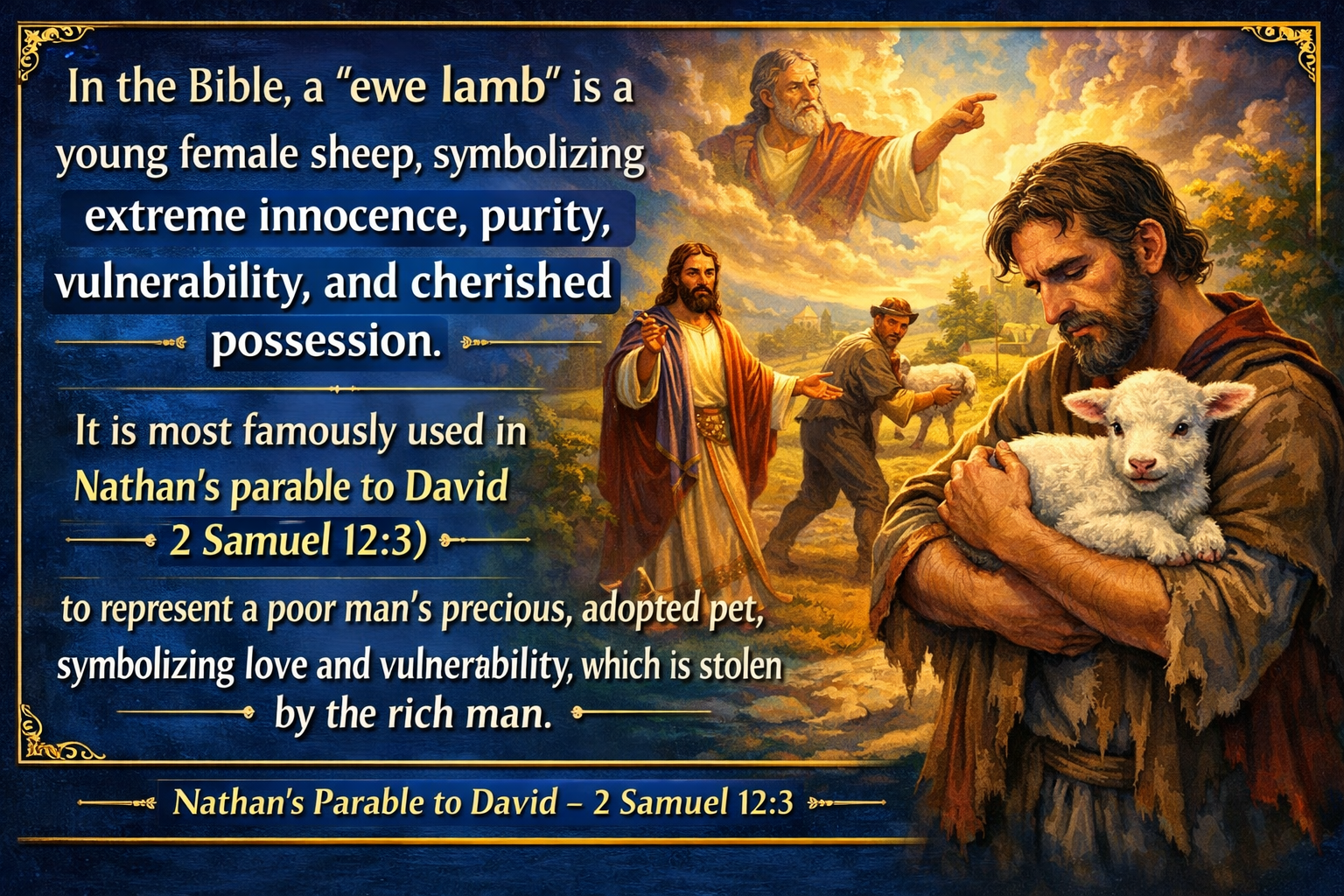
In the Bible, a ewe lamb is a young female sheep and often represents innocence, vulnerability, and something deeply cherished.
One of the best-known examples appears in Nathan’s parable to David in 2 Samuel 12:3, where the ewe lamb helps picture love, loss, and moral conviction.
Test your knowledge of the laws of purity, cleansing, and the Day of Atonement as outlined in these foundational chapters.